
Strategies for Engaging and Empowering Students
The below presentation contains strategies for how to engage and empower students to take action to address climate change. The intended audience is fellow educators and administrators to further youth involvement and a culture of sustainability.
Strategies for Engaging Colleagues
Start from the Heart
Start from the heart by talking about why it matters to us personally and how it relates to our personal values. For one reason or another, everyone has a reason to care about climate change. Whether it’s because of children, living near a coastline, being affected by wildfires, enjoying winter sports, or a multitude of other everyday related reasons, everyone is being affected by climate change. Finding out someone else’s values and reasons to care can open up dialogue about climate change that doesn’t focus on statistics or politics. (Hayhoe)
Talk to People from Common Community Groups
Talk to people from common community groups because there will naturally be at least one shared value. In Katharine Hayhoe’s speech, she discusses talking to an atheist about finding a community group related to what he’s passionate about and what he already likes doing as a starting point for discussing climate change, rather than talking to churches that he does not identify with (Hayhoe). For me, this could mean talking to fellow colleagues at work, talking to people that like to ski or snowboard, or people at hockey. These are groups of people in my community that I can relate to and I know personally that automatically have a shared value that could be the starting point for a conversation about climate change.
Focus on Solutions
Talk about solutions that will help lead to a better future. We need rational hope instead of fear (Hayhoe). This can be done by talking about ways to reduce our carbon footprint, such as more sustainable energy options for our home and transportation, changing travel plans to reduce carbon emissions, or simply putting in effort to reduce food waste. Additionally, actively searching for subject matter related to solutions that are being put into action can help increase positive and informed dialogue when talking to someone about climate change (Kelsey).
Examples of Hopeful Climate Action
Zoning for Data Centres: Our local city council in Terrace recently updated zoning rules for data centres to require a public hearing before being approved. Rumours about a data center being built in Terrace have started going around and most people are against the idea because of the water usage associated with them. This topic would resonate with teachers at my school because it’s a local topic, has interesting political ties, and enough controversy to peak students’ interest. Additionally, it’s closely related to the topic of using AI as a tool for making worksheets and saving time. It’s also has the positive aspect of city council ensuring the opportunity for public input if they get a proposal. (Garrett)
Removal of Invasive Species: A second climate action topic that would resonate with colleagues is the removal of invasive species. There is a walking trail through a forest with a creek that’s close to our school called Howe Creek Trail. Many teachers take classes on walks through it. It’s a beautiful oasis that’s within walking distance of our school and is appreciated and used by many community members. However, it has been affected by species of invasive plants, such as Foxglove and Watercress. Watercress was successfully removed from the pond in the trail years ago. Foxglove are currently spreading in the trail area. Seeing the before and after of the Watercress can give hope for stopping the spread of Foxglove. Removing the Foxglove would leave a positive impact on the trail and is an easy action to take when the proper precautions are taken when dealing with the poisonous plants. (“Foxglove”)
References
“Foxglove.” Invasive Species Council of British Columbia, bcinvasives.ca/invasives/foxglove/. Accessed 10 July 2026.
Garrett, Catherine. “Terrace council begins process to set zoning rules for data centres.” CBC News, 23 June 2026, https://www.cbc.ca/news/canada/british-columbia/terrace-council-data-centres-9.7246173.
Hayhoe, Katharine. “The most important thing you can do to fight climate change: talk about it.” YouTube, uploaded by TED, 11 Jan. 2019, https://www.youtube.com/watch?v=-BvcToPZCLI. (scroll down for embedded video)
Kelsy, Elin. “Why Hope matters: How to stay hopeful amidst the climate crisis.” YouTube, uploaded by Climate Atlas of Canada, 28 Mar. 2025, https://www.youtube.com/watch?v=wPr8NuF2_X8&t=2s. (scroll down for embedded video)
Leisure Services. “Howe Creek Invasive.” The City of Terrace, 26 Aug. 2016, https://www.terrace.ca/discover-terrace/news/howe-creek-invasive.
Strategies for Maintaining Passion and Capacity
Be Mindful
The first step to self-care is recognizing when you need it. This means being mindful of how you’re feeling. As Lisa Baylis explains, it means asking yourself what you’re noticing and what you’re experiencing (The Mindfulness for Learning Podcast, 8:55). If you ignore your body and emotions, you will never get to the part of taking care of those emotions.
Complete the Stress Cycle
I learned about the stress cycle during the teaching program. The stress response cycle, as described by Emily and Amelia Nagoski, is an emotional cycle in our bodies that need to be exhausted and completed in order to end. They trace it back to our ancestors that were being chased by an animal and experienced the fight or flight response. Running away or winning the fight was a signal to the body that it could relax. When the physical fight or flight can’t happen with our modern-day stressors, we need to signal the same completion response to our bodies in a different way. Although this is not a way to deal with the stressor, it helps your body feel relief from the emotional stress. Ways to do this include physical activity, imagination, creative self-expression (not associated with your job!), and connection. With these things in mind, the ways I complete the stress cycle are doing a workout, even if it’s only 10 minutes, reading or listening to a book, baking, or going to my partner for a 20 second hug. Understanding the stress cycle has been a huge help to me and has helped prevent me from reaching burnout. If you haven’t heard of the stress cycle before, I highly recommend watching this video of the Nagoski sisters discussing it.
Have the Mindset of a Lifer
A way to avoid burnout is to approach education for sustainable development and climate change with the mindset that it’s not going to be solved in our lifetimes. We need to recognize that we’re playing the long game and it will take generations of education and climate change to get where we need to be. The term “Lifer,” as explained by Sadie Morris, “means accepting both one’s ability to affect change and one’s limitation” (Morris). Pushing past one’s limitations may result in the unfortunate result of giving up all together. We need endurance and stamina, not a short, intense burst of activism.
Stay Connected
It’s important to stay connected to a community of people. Even if it’s a small community of like-minded individuals, we need other people along this journey. We got into this mess as a group and that’s how we’ll get out of it. As Susie Kincade describes, one of her strategies for “staying sane is remembering that [she’s] not alone” (Kincade).
Active Hope
Active hope is not that same as optimism. It involves envisioning a future and then taking steps and making changes that lead towards that future. Active hope is a practice that involves doing (Morris). It’s not sitting back and wishing for the future to be a certain way. It’s putting that wish into action and helping to achieve the vision.
References
Kincade, Susie. “Self Care for Activists.” The Millennium Alliance for Humanity and the Biosphere, Stanford University, 10 Feb. 2020, https://mahb.stanford.edu/library-item/self-care-for-activists/.
Morris, Sadie. “Burned Out on a Burning Planet.” Common Home, Georgetown University, 2 Feb. 2022, https://commonhome.georgetown.edu/topics/climateenergy/burned-out-on-a-burning-planet/.
Nagoski, Emily and Amelia Nagoski. “Emily & Amelia Nagoski, Burnout – XOXO Festival (2019).” XOXO Festival, YouTube, 17 Oct. 2019, https://www.youtube.com/watch?v=BOaCn9nptN8.
The Mindfulness for Learning Podcast. “21. Self-Compassion for Educators – Lisa Baylis.” Spotify, 19 June 2022, https://open.spotify.com/episode/7m6ndBsBUliYti54zqt6Ou?si=oZhWaDHARFOcu0fsJashPw
Community Assets Map
The below document is a community asset map for Terrace, BC, in relation to Skeena Middle School. The community assets included are relevant to education for sustainable development.
Videos
Books
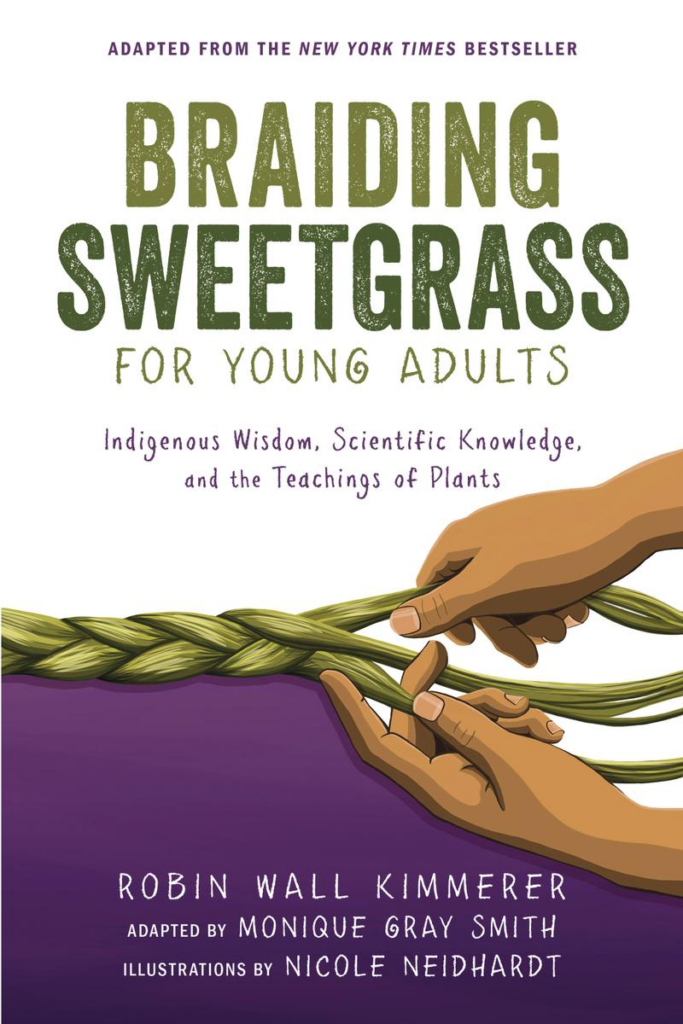
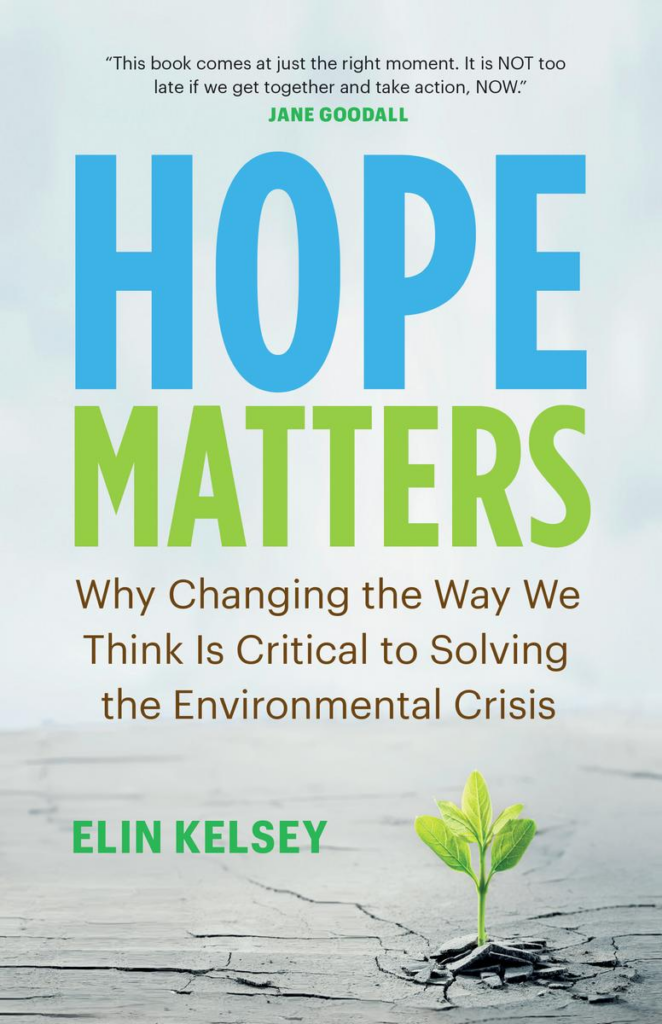
Why Changing the Way We Think Is Critical to Solving the Environmental Crisis by Elin Kelsey (available on Queen’s Uni. Omni)
Websites
For a student-friendly explanation of what climate change is:
United Nations: What is Climate Change?
Data related to sustainable Development:
Our World in Data: CO₂ and Greenhouse Gas Emissions