
Positionality
I am a white, cisgender, heterosexual, 30-year-old woman. I am a middle-class homeowner that was born in Canada to descendants of colonialism. I’m neurotypical with stable mental health and a post-secondary education. I recognize that I come from a place of privilege that may not be shared by all my students. The focus on history during my post-secondary education, especially the history of Indigenous peoples in North America, has helped me understand the different backgrounds and cultures other people may be coming from and has helped me develop empathy for people that don’t share my privileges. Continually learning about others, which is a privilege in itself, and the history that has shaped our lives today is helping me bridge the gap between my position of privilege and groups of people I can’t personally identify with.
Definition of Sustainability
Sustainability means being able to do something repeatedly and indefinitely. A sustainable society is one that can continue in this manner. Since this involves people living off the land, both need to be protected and sustained. Prioritizing the sustainability of people and planet aligns with the definition outlined by Aaron Wilson (Wilson, 2021). He considers sustainability as having three pillars: social sustainability, economic sustainability, and environmental sustainability. This definition encompasses people and planet, rather than focusing solely on the environment. Looking at the bigger picture in this way matters because having a healthy environment is important, but if everyone’s quality of life plumets as a result, the environment could just end up in the same situation as people find ways to improve their quality of life again.
Why I Care About Sustainability and ESD
The climate crisis we are facing requires immediate action. With the global community experiencing extreme weather events, including “intense droughts, water scarcity, severe fires, rising sea levels, flooding, melting polar ice, catastrophic storms and declining biodiversity” (“What Is Climate Change?”), climate change is an issue that will only effect everyone more severely in the years to come.
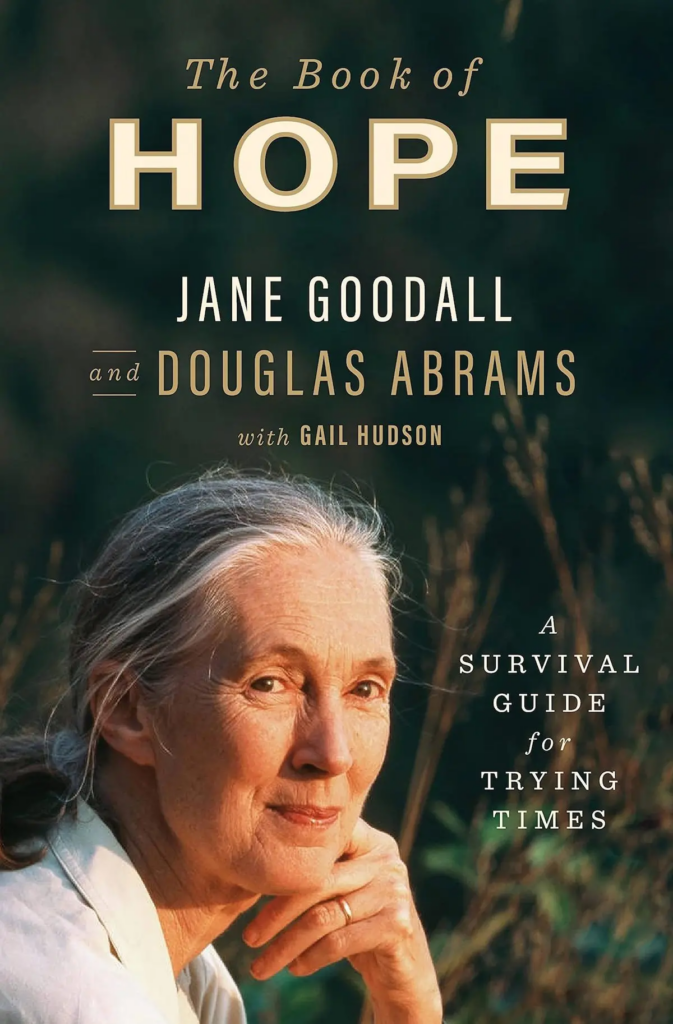
It’s difficult to remember a specific moment that sparked my urgent desire to take steps towards sustainability. It developed gradually as I saw more and more trees being cut down in the area I grew up in and noticing the growing lack of wildlife. Seeing more news articles about forest fires and climate change also contributed. My concerns definitely broadened when I took a post-secondary environmental history course and during CONT917: Teaching Through a Sustainable Development Goals Lens. I’ve also read some books recently, such as The Book of Hope by Jane Goodall, that drew more of my interest to the topic. Additionally, I’ve lived in Terrace, part of the traditional territories of the Ts’msyen Peoples, all my life and I know the weather patterns are not even close to what they were when I was kid in terms of rain, snow, and heat.
I also care about educating for sustainable development because “the best way of equipping today’s youth to cope with the challenges of a warming world is through improving the quality of climate change education” (Strauss). Although learning about climate change is important, taking action is equally important. As our climate changes and people experience more climate related disasters, climate anxiety increases, especially among youth who have begun to lose confidence in their futures. According to a study published in 2021, “more than 45 per cent [of respondents aged 16 to 25] said their feelings about climate change negatively affected their daily life and functioning” (Basu) and climate change has only gotten worse since then. Engaging students in climate action can help those affected by climate anxiety. Helping young people to connect with each other and take action for climate change “may be the most beneficial approach” (Sanson, p. 207) for climate related mental health issues. For these reasons, I care deeply about educating my students for sustainable development.
My Role in Sustinability
As an educator in British Columbia, I have the privileged opportunity to both educate myself and my students through education for sustainable development. Learning about climate change is important because it’s a wicked problem which solutions that are not confined to a well-defined set (Robinson). It’s also a social justice issue, not just a science topic (Strauss). Our future world is being shaped today and everyone has the power to make positive changes, no matter how small those changes may be. Although there are many aspects of sustainable development that are out of my control, such as poverty and climate change, I am in a position that provides me with the opportunity to positively influence my students and the school community.
I can control sustainability in my classroom in terms of paper usage, sustainability of supplies purchased for my classroom, waste involved in art projects, and turning lights off when not needed. I can also ensure equitable treatment of students in my classroom. Although I don’t have control over students’ actions, I can influence them by weaving education for sustainable development (ESD) into the BC Curriculum. ESD “teaches individuals to make informed decisions and take action, both individually and collectively, to change society and protect the planet. It equips people of all ages with the knowledge, skills, values, and ability to tackle issues such as climate change, biodiversity loss, overuse of resources, and inequality that impact the well-being of people and the planet” (UNESCO). This includes discussing fast fashion, poverty, and increasing their awareness of local and global issues. It is much broader than just climate change and can be incorporated into the BC curriculum in a variety of ways. For grade 7, this includes both the BC Core Competencies and across the subjects. By recognizing where ESD aligns with the BC Curriculum, I can work to weave the two together to benefit my students’ learning.
I can also incorporate Two-Eyed Seeing into my classroom. This means considering the perspectives of multiple cultures, especially local Traditional Knowledge. It means working together and using the strengths of different perspectives and ways of thinking and using them in harmony for the greater good (Barlett, p. 335).
Additionally, I can contribute to building a culture of sustainability within my school. Building a community of colleagues that understand the importance of education for sustainable development and working together to achieve goals will help to develop the school as a model of sustainability and lead to a bigger impact. A culture of sustainability is what drives actions towards sustainability, not the other way around. Otherwise, programs fade out as staff turn over and people lose interest (Cramer).
References
Bartlett, Cheryl, et al. “Two-Eyed Seeing and Other Lessons Learned within a Co-Learning Journey of Bringing Together Indigenous and Mainstream Knowledges and Ways of Knowing.” Journal of Environmental Studies and Sciences [New York], vol. 2, no. 4, November 2012, pp. 331–40, https://doi.org/10.1007/s13412-012-0086-8.
Basu, Brishti. “The kids are not all right: How young people are dealing with increasing climate anxiety.” CBC News, 23 Aug. 2023, https://www.cbc.ca/news/science/climate-anxiety-wildfires-teens-1.6944352.
Cramer, Jenna. “Fostering a Culture of Sustainability in Schools: Getting to the ‘Why.’” Green Schools National Network, 1 Mar. 2016, greenschoolsnationalnetwork.org/fosteringacultureofsustainability/.
Robinson, Walter. “‘Something Wicked This Way Comes’: 10 Reasons Why Climate Change as a ‘Wicked Problem.’” Climate Change & Society at NC State University, 20 Sept. 2017, ccs.sciences.ncsu.edu/something-wicked-this-way-comes-10-reasons-why-climate-change-as-a-wicked-problem/.
Sanson, Ann and Marco Bellemo. “Children and youth in the climate crisis.” In BJPsych Bulletin 45, Aug. 2021, 205–209, https://pmc.ncbi.nlm.nih.gov/articles/PMC8499628/.
Strauss, Valerie. “Why It’s a Mistake to Teach Climate Change Only in Science Class.” The Washington Post, 22 Sept. 2021, www.washingtonpost.com/education/2021/09/22/how-teach-climate-change-crisis/.
UNESCO. “What You Need to Know about Education for Sustainable Development.” UNESCO, 8 Apr. 2026, www.unesco.org/en/sustainable-development/education/need-know.
“What Is Climate Change? | United Nations.” United Nations, www.un.org/en/climatechange/what-is-climate-change. Accessed 3 July 2026.
Wilson, A. (2021). Sustainability series: What is sustainability and why is it important? Retrieved from https://eco.ca/blog/what-is-sustainability-and-why-is-it-important/
Published: