Reciprocity
I read the chapter called “The Gift of Strawberries.” It’s about gift economy compared to market economy. Wild strawberries are a gift from the Earth, rather than market strawberries that are grown and sold by a producer. When things are viewed as a gift from the Earth, they involve gratitude and reciprocity. Reciprocity means taking care of the earth as it cares for us. Taking without caring for something is not a reciprocal relationships. This piece of Indigenous wisdom aligns with climate action and is part of the First Peoples Principles of Learning. Consumerism from the store does not provoke the same feelings of gratitude or sustainability as harvesting from nature or even a planted food garden.
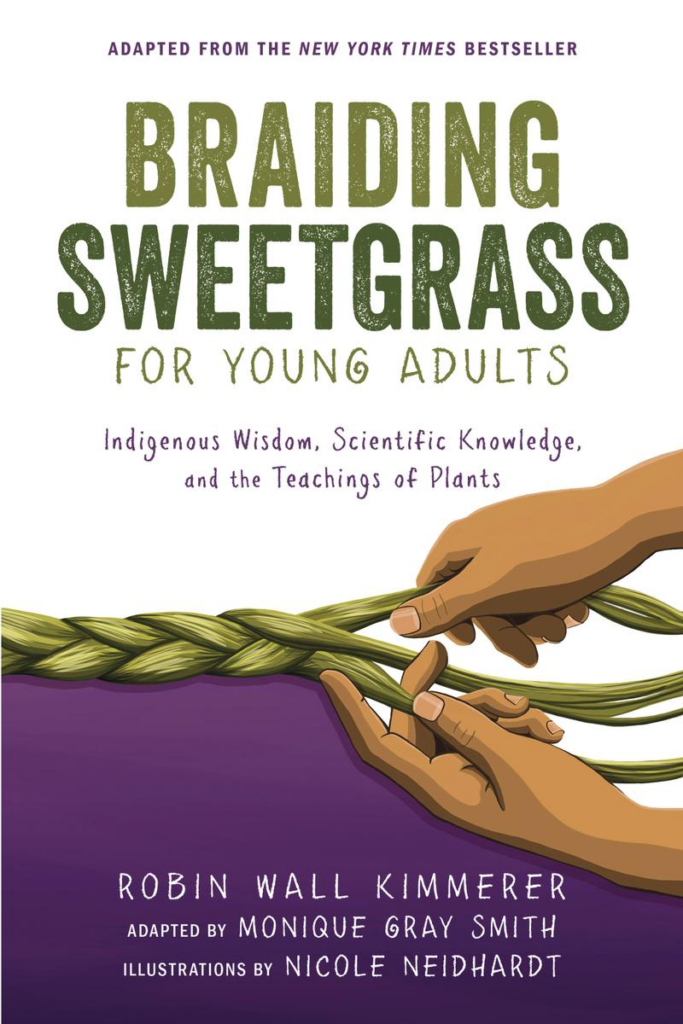
I would like to read this chapter to a class and have them tackle the question at the end: What is something you or your family currently buy that after reading this chapter, you now understand to be a gift? How will this new information impact your shopping habits? This would also be interesting to tie to the art project we did where students gathered dried leaves to make art with. This topic would also help people consider the supply chain when they are consuming products, even if they can’t switch to foraging/harvesting, which is connected to the warming ocean, climate change, salmon, and other topics included in this stewardship plan.
Indigenous Guardians
Indigenous peoples have cared for the land since time immemorial. Before Europeans made contact in North America, Indigenous peoples had a reciprocal relationship with the land. They harvested what they needed and were grateful to the land for it’s gifts. The devastation the European settlers caused, especially with carbon emissions since the industrial revolution, has caused irreversible consequences and ecological turmoil. However, the understanding and knowledge of Indigenous elders provides guidance on how to change this. Indigenous Guardians are applying these principles to protect the land and animals. They’re also contributing to western science research by collecting data instead of non-local researchers traveling to collect data.
If we take care of the land, the land takes care of us.
Valérie Courtois
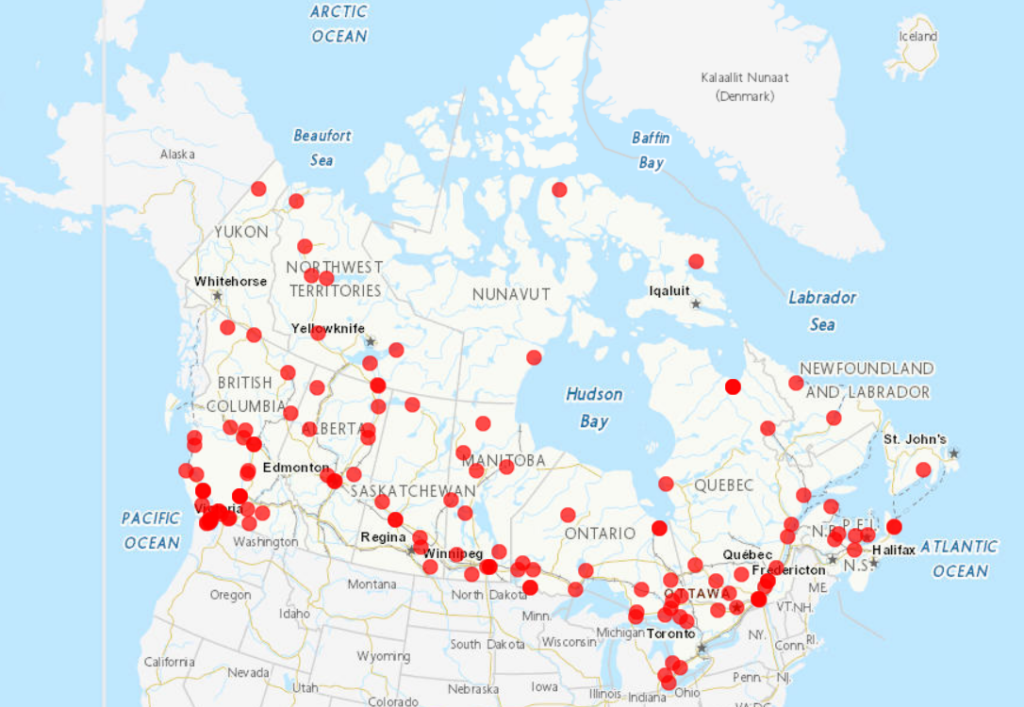
As Valérie Courtois states in the above TED Talk, “some of the biggest, most ambitious plans to protect land in Canada are led by Indigenous Peoples” (TED, 8:30). There are now many areas being cared for by Indigenous Guardians. The below map shows how many areas in Canada are being protected and cared for by Indigenous Guardians as of 2026. In 2018-19, there were only 28 Indigenous Guardian groups. As of 2025-26, there are 134.
References
Government of Canada. “Indigenous Guardians map.” 13 Mar. 2026, https://www.canada.ca/en/environment-climate-change/services/environmental-funding/indigenous-guardians/map.html.
TED. “How Indigenous Guardians Protect the Planet and Humanity | Valérie Courtois | TED.” YouTube, 26 Dec. 2022, https://www.youtube.com/watch?v=8WmrJTyWydw.
Published: